
New Paper in AI Magazine: Knowledge Engineering for Open Science
We’re pleased to announce the publication of a new paper in AI Magazine titled “Knowledge Engineering for Open Science: Building and Deploying Knowledge Bases for Metadata Standards.”
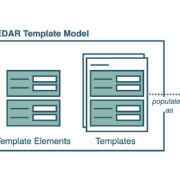
Synthesizing ten years of CEDAR research, the paper makes the case that the metadata templates at the heart of CEDAR are a modern form of declarative knowledge base—capturing, in symbolic form, how a community of scientists believes its data should be described so that datasets can be findable, accessible, interoperable, and reusable (FAIR).
The Big Idea: Metadata Standards as Knowledge Bases
Decades ago, hand-built knowledge bases powered intelligent systems by encoding expert knowledge in an inspectable, editable form. The paper argues that CEDAR templates play the same role for open science: they encode a community’s metadata reporting guidelines as machine-actionable templates that enumerate the attributes of an experiment and link those attributes to ontologies and value sets. Unlike patterns learned from data, these standards often don’t yet exist in any “learnable” form—so capturing them still requires the careful, expert-driven knowledge engineering the field has practiced for decades.
Read more