
New Paper in the Data Science Journal: Author Once, Publish Everywhere with the CEDAR Embeddable Editor
We’re pleased to announce the publication of a new paper in the Data Science Journal titled “Author Once, Publish Everywhere: Portable Metadata Authoring with the CEDAR Embeddable Editor.”
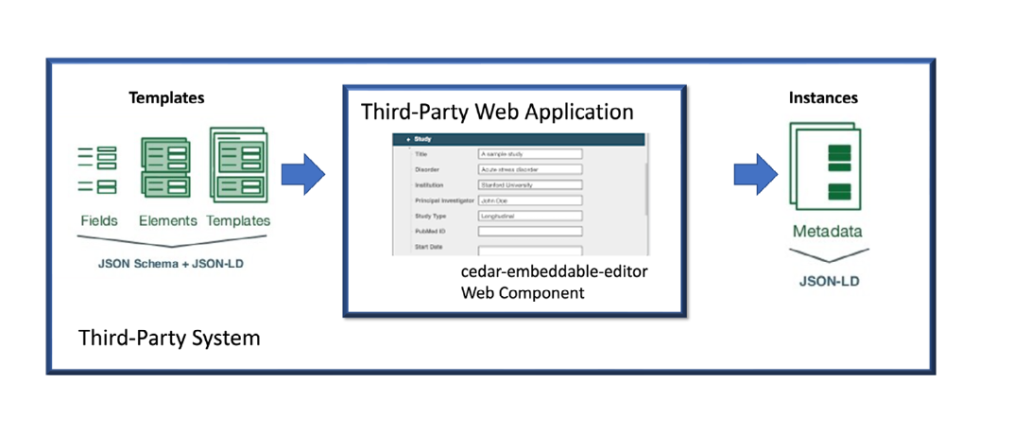
The paper takes a comprehensive look at the CEDAR Embeddable Editor (CEE)—the lightweight, interoperable Web Component that brings structured, standards-based metadata authoring directly into third-party platforms. Instead of sending researchers off to a separate tool, the CEE embeds metadata creation into the environments where they already work, helping make research data findable, accessible, interoperable, and reusable (FAIR).
The Challenge: Rich Metadata Without Leaving the Workflow
High-quality, “rich” metadata are essential for FAIR data, and the CEDAR Workbench has long provided tools to design machine-actionable metadata templates that encode community standards in a computable form. But the original model required researchers to leave their native platforms and engage with a separate, centralized editor—a barrier that limited its integration into routine research and data-submission workflows.
The Solution: A Template-Driven, Embeddable Editor
The CEE addresses this by rendering metadata forms dynamically from CEDAR’s machine-actionable templates, entirely inside a host platform. Key capabilities include:
- Zero UI development—platforms embed the component without building or maintaining custom metadata interfaces
- Machine-actionable templates—forms are generated directly from CEDAR template specifications, so updates to a standard are reflected automatically
- Semantically rich output—metadata are produced in JSON-LD
- Ontology-based value selection via the BioPortal ontology repository
- External authority resolution for persistent identifiers such as ORCID (people), ROR (organizations), and the EPA CompTox API
Real-World Deployments
The paper presents deployments of the CEE in generalist scientific data repositories, including Dryad and the Open Science Framework (OSF), demonstrating how embedding standards-aligned metadata tools directly into data-publication workflows can promote wider adoption of community practices and improve metadata quality across disciplines.
Why It Matters
By encapsulating the presentation and data-creation logic in a single reusable component, the CEE lets scientific communities deliver standards-compliant metadata tools with far less engineering effort. It offers a practical path toward making FAIR metadata the default rather than the exception—consistent, ontology-linked, and machine-actionable by design.
Learn More
? Read the full article in the Data Science Journal: https://doi.org/10.5334/dsj-2026-002.

